Build a flu readiness kit before your family needs it
Synopsis
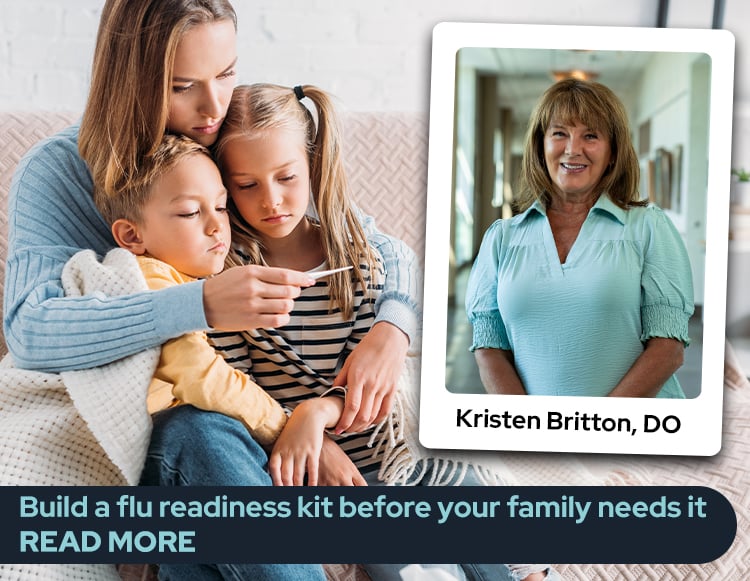
One minute your child is running around the house, and the next they're curled up on the couch complaining they don't feel well. Flu can come on suddenly, causing fever, cough, body aches, and fatigue. Flu season typically runs from October to May.
When the flu hits and your child is sick, the last thing you want to do is search for a thermometer or realize you're out of children's fever medicine.
Preparing ahead now with a home flu readiness kit can help you monitor your child's symptoms, keep them comfortable, and know when it's time to seek care.
What should I keep in my flu readiness kit?
Don’t stock your entire medicine cabinet. Start with a few basics to help you care for a sick child at home, such as:
A reliable digital thermometer: Keep a working digital thermometer and make sure you know how to use it correctly for your child's age. Rectal thermometers are most accurate for infants.
Age-appropriate fever and pain medicine: Keep children's acetaminophen or ibuprofen on hand to help reduce fever and relieve aches and pain. Follow the product directions for your child's age and weight.
For tips on safely giving your child medication, including a dosing chart, read our guide to medication safety for children.
Saline and nasal care: Saline drops can loosen mucus and help a stuffy nose. For babies and young children, a nasal aspirator or bulb syringe can help remove mucus.
A cool-mist humidifier: A cool-mist humidifier can ease congestion and make breathing more comfortable.
Plenty of fluids: Keep water, rehydration drinks such as Pedialyte, low-sugar sports drinks, and popsicles available. Staying hydrated is especially important when a child has a fever or isn't eating and drinking normally.
Easy-to-eat foods: Keep options such as soup, broth, oatmeal, toast, crackers, and applesauce stocked for when your child doesn't have much of an appetite.
Comfort and hygiene supplies: Store tissues, hand sanitizer, and disinfecting wipes.
Remember to check your supplies and replace anything that has expired or is running low.
Need to stock up? You can find these items at a local pharmacy or convenience store. Our Home Medical Equipment (HME) on the main concourse of the hospital also carries over-the-counter flu and cold products and other supplies.
What should I have ready besides supplies?
A flu readiness kit isn't just about supplies. Having important information ready can help you make decisions quickly when your child is sick.
Make sure you know:
- Your child's current weight
- Your child's health conditions and medications
- Your child's pediatrician’s or PCP’s phone number
- Where to find prompt medical care
- How to use MyReid to check symptoms and find care
What if my child gets the flu?
Even with the best preparations, your child can still get the flu. Children younger than 5, especially those younger than 2, and children with certain chronic health conditions are at higher risk for serious complications.
Annual flu vaccination helps protect against serious illness and reduce the spread of flu. If your child hasn't been vaccinated yet, talk with their PCP, local pharmacist, or clinic. It takes about two weeks to build antibodies, so getting vaccinated before flu spreads widely provides the best protection.
When should I go to urgent care?
Part of being prepared is knowing where to go if your child needs medical attention. Our Urgent Care facilities in Connersville and Richmond offer walk-ins, with no appointment needed. Use MyReid to check current wait times through the Find Care Now feature.
If your child has severe trouble breathing, bluish lips or face, severe dehydration, or chest pain, call 911 or seek emergency care.
When can my child go back to school?
Wondering when your child can safely return to school after being sick? If you're unsure whether your child is ready, read our blog for guidance: Can my child go to school with a cough or fever?
Be ready before flu hits
You can't always prevent the flu, but you can be prepared. A stocked readiness kit and a plan for finding care can help you focus on helping your child rest and recover.
If you’re concerned about your child’s cough, fever, or other symptoms, schedule an appointment with your child’s PCP or Dr. Kristen Britton. Getting the right care can help your child feel better and give you peace of mind.