Nobody wants to have a colonoscopy
Synopsis
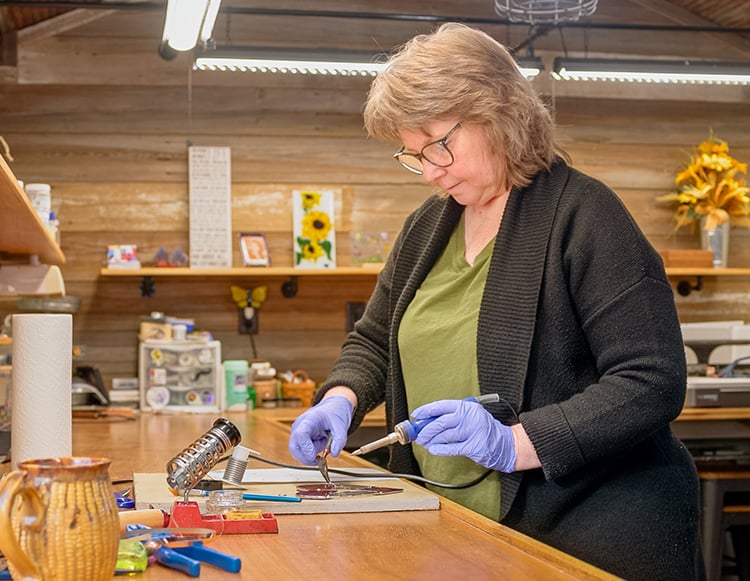
For 10 years, Mary Burk pushed her health to the bottom of the to-do list.
“I felt good,” she said.
There were other priorities for the lifelong Franklin County resident to focus on.
She worked full-time for seven years with the county health department as the Health Secretary.
Afterward, she started She Shed Glass Studio LLC, hosting stained glass classes from the home studio her husband of 43 years, Chris, built for her on their farm.
Then two grandchildren came along — now ages 5 and 3. They’re active, and Mary cares for them one day a week. Chris has also retired, and they’re looking ahead to their future.
Finally, she decided it was time to put her health first.
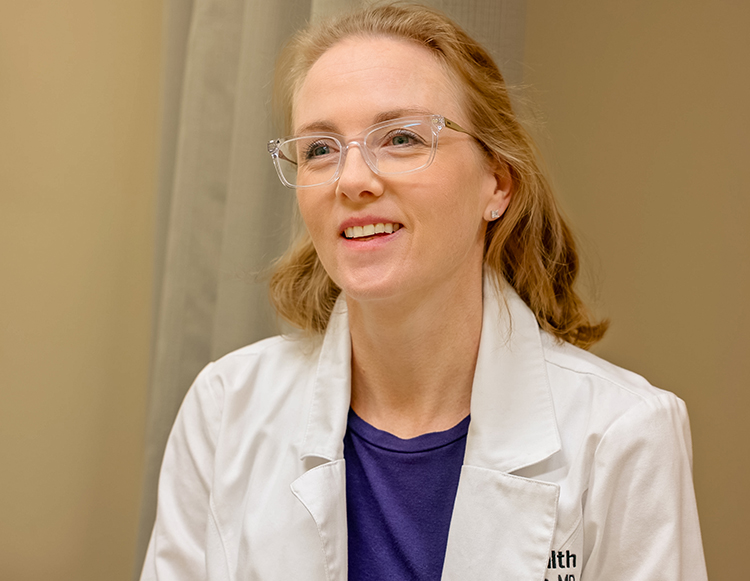
Mary needed a provider, and Chris recommended his physician, Lindsay Porta, MD, at Reid Health Primary & Specialty Care – Brookville.
The couple values having a primary care provider nearby.
Dr. Porta, who has practiced in Brookville for two years, also calls the community home.
“I love that it’s a rural, local community,” Dr. Porta said. “Everybody we see feels like family. It’s the iconic family practice.”
In rural communities, access to local primary care makes it easier for patients to stay current on preventive screenings and address concerns early.
“It’s hard to go to the doctor. People are busy. If you feel well and you don’t have any concerns, you might not think to go,” Dr. Porta said.
“But if someone is local, it's a lot easier to go and to make sure you're keeping up with all the recommended screenings for your health.”
During her first visit, Dr. Porta instantly put Mary at ease.
“She was just like talking to a friend,” Mary said.
“Dr. Porta was very patient and listened to everything, all my concerns, including that I hadn’t had any screenings for a long time, which I was nervous about.”
Part of putting her health first meant facing the preventive screenings she had postponed — including a colonoscopy.
Why colorectal cancer screening matters
Colorectal cancer — cancer of the colon or rectum — is now the leading cause of cancer deaths in adults under the age of 50, with the largest increases among people in their 20s and 30s. For adults 50 and older, it’s the second leading cause of cancer-related deaths in the United States.
Although screening and early detection have reduced mortality rates in older adults, rates among younger adults continue to rise by 1.1%, or about 3,900 new cases in people under 30 annually, according to a January 2026 study in the American Journal of Medicine.
Contributing factors might include diets high in fat and processed foods, low fiber intake, sedentary lifestyles, or environmental influences. Colorectal cancer has long been viewed as a condition that primarily affects older adults, which might lead younger people to dismiss it when symptoms appear.
As a result, warning signs such as rectal bleeding, abdominal pain, changes in bowel habits, or anemia might go unreported to their provider or be attributed to less serious causes, delaying evaluation and diagnostic testing such as a colonoscopy.
Some risk factors — like age or genetics — cannot be changed, but modifiable factors such as diet, activity level, or excess weight can be improved. But even people without risk factors can develop colorectal cancer.
Because early-stage disease often causes no symptoms, routine screening starting at age 45 is critical for those at average risk.
Colonoscopies are generally recommended every 10 years after the initial procedure, though those at increased risk might require earlier or more frequent screening, including individuals with:
- A personal or family history of colorectal cancer or polyps
- Inflammatory bowel disease such as Crohn’s disease or ulcerative colitis
- Inherited syndromes like Lynch syndrome or familial adenomatous polyposis (FAP)
- Type 2 diabetes
- Obesity or a sedentary lifestyle
- Tobacco or alcohol use
- Diets high in processed foods, red meats, or low in fiber, fruits, vegetables, and whole grains
“The risk of putting off screening is developing a more advanced cancer,” Dr. Porta said.
“When it’s caught late, especially after it has spread, it becomes much harder to treat.”
Understanding screening options
Dr. Porta reviewed screening options with Mary.
When it comes to colorectal cancer screening, colonoscopy is considered the gold standard. The procedure can detect, prevent, and remove lesions — or precancerous polyps — before they develop into tumors.
“It can prevent more invasive procedures, chemotherapy, radiation, or treatments no one wants to go through if they can avoid it,” Dr. Porta said.
“With colonoscopies, we can catch cancer before it becomes cancer. If we find precancerous polyps, they can be removed during the procedure. It’s both diagnostic and therapeutic.”
During the procedure, a thin, flexible tube with a camera allows physicians to directly see the entire colon. If polyps are found, they can often be removed immediately and sent for testing.
“It provides reassurance,” Dr. Porta said. “We’re actually seeing the inside of the colon. If everything looks normal, patients can feel confident in that.”
For patients who prefer a non-invasive option, annual FIT (fecal immunochemical testing) is the preferred stool-based screening test and can be completed at home each year.
Another option is FIT-DNA testing (Cologuard®), an FDA-approved, prescription-based test for adults 45 and older at average risk for colon cancer. The test analyzes stool for blood and abnormal DNA associated with cancer or precancerous polyps. Positive results require a follow-up colonoscopy. If results are negative, the test should be repeated at least every three years.
Gastroenterology societies, including the American Gastroenterological Association (AGA) and American College of Gastroenterology (ACG), recommend a colonoscopy when possible, annual FIT as the leading noninvasive option, and FIT-DNA when colonoscopy or FIT cannot be completed.
Regardless of the test chosen, the most important step is getting screened.
Dr. Porta wanted to review the options with Mary and, through shared decision-making, select the test that was right for her.
Taking the next step
Mary said Dr. Porta explained the preparation for the screening, which typically involves a clear-liquid diet for one to three days, reducing fiber intake in advance, and completing bowel prep with a combination of laxatives.
The discussion and the comfort Dr. Porta provided helped Mary decide to move forward with the colonoscopy.
“A lot of people put off a colonoscopy because they've heard horror stories about the prep, but honestly, the Reid staff was here to reassure me it wasn't that bad,” Mary said.
During her procedure, polyps were found and removed. Testing showed they were benign.
“It was very reassuring to know they had found the polyps and removed them, so they didn't become cancerous or give me trouble later on in life,” Mary said.
“Nobody wants to have a colonoscopy. I've never known anybody who’s gotten excited about it. But afterward, I was so relieved to know I didn't have any long-term problems. I'm not looking forward to my next one, but I’ll have another one just so I can keep on top of it.”
Peace of mind for what matters most
Colorectal cancer screening isn’t always an easy topic of conversation but avoiding it doesn’t reduce the risk.
For Mary, staying up-to-date with her screenings means she and Chris can focus on what matters most — the retirement they worked hard to build and their grandchildren.
“We want to take them to Disneyland, see them graduate, get married, and do what they want to do,” she said.
Staying healthy and keeping up with preventive screenings is important so they can accomplish their goals.
“Don’t delay a colonoscopy or any preventive screening,” Mary said. “Life is short. You want to be able to do what you want to do when you’re older. Just have it done. Don’t put it off.”