Community Benefit awards nearly $100,000 for first grant cycle focused on mental health, substance misuse programs
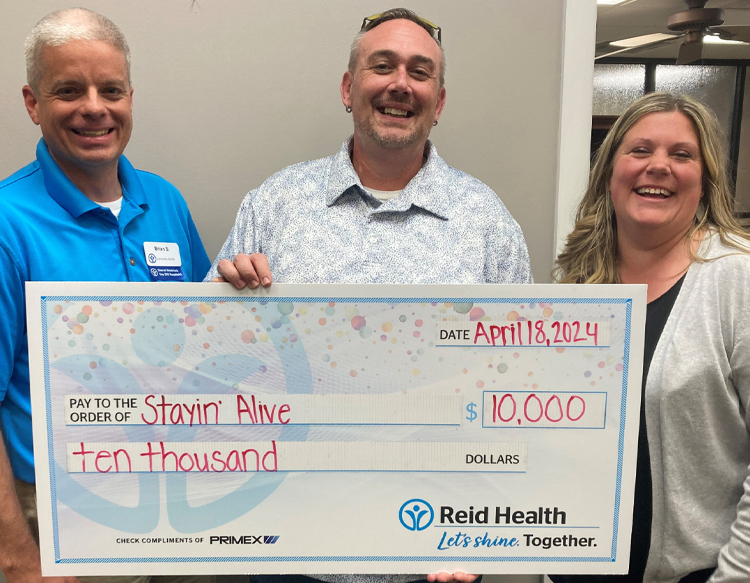
Reid Health Community Benefit is distributing nearly $100,000 to 15 local organizations for the first of three grant cycles this year.
This grant cycle focuses on mental, emotional, and behavioral well-being by improving mental health and reducing substance misuse with $99,791 being awarded to nonprofits, schools, and other regional organizations.
Requests were evaluated based on their ability to improve poor mental health-average number of days, death rate due to suicide, death rate due to drug poisoning, adults who smoke cigarettes, depression-Medicare population, and drug and opioid overdose rate.
Jess Przybysz, Director of Community Benefit and Engagement, said competitiveness for funding has increased for applicants this cycle, highlighting the urgent needs of communities in Reid’s service area in Indiana and Ohio.
“Funding was prioritized to projects that align closest to our health indicators and organizations that have the highest need for our support,” Przybysz said. “We look forward to the positive impact these programs and projects will have for residents in our service area in the coming year.”
Brian Schleeper, Community Benefit Specialist, said a number of excellent applications were submitted with innovative and impactful programs and projects from across the region.
“We’re excited to provide nearly $100,000 to these organizations to assist them in serving their communities and to continue the great work they’re doing every day to address mental health and substance misuse,” Schleeper said.
“These areas were identified as the top health needs in our latest Community Health Needs Assessment, and the grantees are working hard daily to affect positive change. We look forward to seeing how this funding will assist them over the next year in these areas that touch so many in our communities.”
The Community Health Needs Assessment identified three priorities – mental health and substance misuse; physical activity, nutrition, and weight; and maternal, infant, and children’s health. As a result, the Community Benefit Grant Program awards $300,000 over three grant cycles for significant health needs annually.
Applications for the second cycle focusing on physical activity, nutrition, and weight will be accepted until May 10. Organizations with programs aimed at maternal, infant, and children’s health will be able to apply for the third cycle from July 8 to Aug. 9.
The awards for the first cycle include:
- $2,561 to A Better Way Services for training materials and food and travel expenses for safeTALK and Applied Suicide Intervention Skills Training (ASIST) programs.
- $5,100 to Bridges for Life for training a certified peer recovery coach and "Recover Together" program materials.
- $3,750 to Brighter Path Inc. to support children and adult scholarships for the equine therapy program.
- $10,000 to Girls Inc. of Wayne County for staffing, mental health and substance use prevention, and "Informed Together" series program materials.
- $7,500 to Preble Arts for the Essential Humans program which will provide mental health support through art including personnel, supplies, and program materials.
- $7,500 to the Randolph County Veterans outreach center, The Journey Home, to support the veterans outreach team in locating homeless veterans and providing them with services and support.
- $2,500 to Randolph Eastern School Corp. to provide the 3rd Millennium Classroom Intervention Curriculum.
- $9,500 to Recovery Rocks Club Inc. for office supplies, equipment, and program and marketing materials for recovery support groups.
- $5,000 to Salt of the Earth for payroll of the house manager and startup costs toward a new men's transitional living house.
- $7,000 to Servants at Work Inc. to provide wooden and specialty ramps in Reid Health’s service area.
- $2,880 to Soldiers in the Army of the Lord to purchase One Step program software for a men's transitional living home.
- $10,000 to Stayin' Alive for staff, program materials, and marketing for its recovery support group.
- $10,000 to The Shelter Inc. to purchase bunk beds, supplies, and personnel for transitional living space.
- $9,000 to The Shepherd's Way Christian Ministries Cross Road Recovery Center for Women to support a part-time case manager for the recovery program.
- $7,500 to Whole Family Community Initiative to provide counseling services for the House of Ruth residents and their families.
“These organizations are truly committed to improving the health and well-being of our loved ones, whether they're family, friends, or neighbors. I urge residents to get connected and learn about what is offered right here in the places we call home,” Przybysz said.
Community benefit is the basis of the tax-exempt status of not-for-profit hospitals. Community benefit is defined as programs or activities that improve access to health services, enhance public health, advance health knowledge through research and education, and/or relieve the burden of government to improve health.
In 2010, the Affordable Care Act added new requirements for tax-exempt hospitals in the areas of community health needs assessment (CHNA), implementation strategy, billing and collections, and reporting. In 2014, the IRS issued final rules implementing these requirements. The goals of these provisions are to ensure tax-exempt hospitals are meeting the health needs of their communities and to ensure greater transparency and accountability.
Grants, along with other specific outreach and requirements to meet Reid Health’s not-for-profit status, have put more than $168 million back into the community in the past five years. A committee of Reid’s governing board and community members reviews grant requests. The grants are awarded as part of the health system's efforts as a mission-driven, not-for-profit organization.
More information about the Reid Community Benefit program, the health needs assessment and the implementation strategy can be found at ReidCommunities.org.