Community Grants
Apply for Reid Health Community Grants and access resources to support programs improving health and wellness in our communities.
Overview: Reid Health Community Grants
Reid Health is committed to giving back to the communities we serve through community grants. These contributions help establish partnerships with local nonprofit organizations that share our mission to improve health and wellness.
By providing funding to support evidence-based programs, we ensure care extends beyond the hospital walls into the neighborhoods where our community members live, work, and learn.
Grant eligibility and requirements
Community grants are awarded to qualified 501(c)(3) organizations and other tax-deductible entities. Programs must meet an identified community need and align with one or more of the following objectives:
- Improve access to health services
- Enhance public health
- Advance general knowledge
- Relieve the burden of government to improve health
- Serves one or more of our eight-county service area: Fayette, Franklin, Henry, Randolph, Wayne, and Union in Indiana, and Darke and Preble in Ohio
Grant exclusions
We don’t fund projects that solely cover construction, renovation, land acquisition, sports teams, events, endowments, capital campaigns, indirect operating expenses, or projects completed before the grant cycle ends.
2026 Grant cycles & priorities
NOTE: All grant cycles for 2026 are now closed. 2027 grant information will be posted at a later date.
Mental health and substance use
Goal: Promote mental, emotional, and behavioral well-being within the communities we serve by addressing social determinants of health and improving mental health outcomes, while reducing substance use through coordinated, community-driven efforts across stakeholders and non-profit partners.
Indicators:
- Death rate due to drug poisoning
- Mothers who smoked during pregnancy (Maternal, fetal, & infant health)
- Age-adjusted death rate due to suicide (Mental health & mental disorders)
- Depression: Medicare population (Mental health & mental disorders)
- Poor mental health health: average numbers of days
- Adults who smoke (Health/tobacco use)
- Learn more
Wellness and lifestyle (Nutrition & obesity)
Goal: Advance community well-being by addressing social determinants of health and ensuring equitable access to healthy living resources, while fostering collaborative partnerships that support sustainable lifestyle changes.
Indicators:
- High blood pressure prevalence (Heart disease & stroke)
- Life expectancy (Mortality data)
- Adults 20+ who are sedentary (Physical activity)
- Poor physical health: Average number of days (Wellness & lifestyle)
- Food insecurity rate (Food insecurity)
- Access to parks (Built environment)
- Learn more
Chronic disease (Diabetes, Heart disease, & stroke)
Goal: The goal of this priority area is to reduce and prevent chronic disease and improve the overall health and well-being of the community by addressing social determinants of health through coordinated, community centered strategies.
Indicators:
- Diabetes: Medicare population (Diabetes)
- Adults who experienced coronary heart disease (Heart disease & stroke)
- Age-adjusted death rate due to heart attack
- Heart failure: Medicare population
- High blood pressure prevalence
- Hyperlipidemia: Medicare population
- Learn more
Grant application process
The application process is designed to connect Reid Health with organizations that can demonstrate measurable impact on community health.
Application process:
- Complete the online application form
- Submit detailed program information, including goals, target populations, and potential outcomes
- Demonstrate other funding sources if required
- It’s recommended no more than 50% of your request be for staff or personnel. If your request exceeds this amount, we’ll require additional information on your application.
Review:
- The Community Well-Being Committee reviews applications.
- Organizations scoring below 75% might not be considered.
- Only one application per organization/EIN per cycle is accepted.
- Award notifications are sent via email.
Expectations:
- $10,000 request limit per application
- Organizations can apply in two cycles each year for different programs.
- Grant recipients must submit impact reports to remain eligible for future funding.
Past grant recipients
- 2025: Mental Health & Substance Misuse | Physical Activity, Nutrition & Weight | Maternal, Infant & Children's Health
- 2024: Mental Health & Substance Misuse | Physical Activity, Nutrition & Weight | Maternal, Infant & Children’s Health
- 2023: Mental Health & Substance Misuse | Physical Activity, Nutrition & Weight | Maternal, Infant & Children’s Health
- 2022: Mental Health & Substance Misuse | Physical Activity, Nutrition & Weight
- 2021: Mental Health & Substance Misuse | Physical Activity, Nutrition & Weight
- 2020: Mental Health & Substance Misuse | Physical Activity, Nutrition & Weight
- 2019: Mental Health & Substance Misuse | Physical Activity, Nutrition & Weight
community engagement
AED Grant program
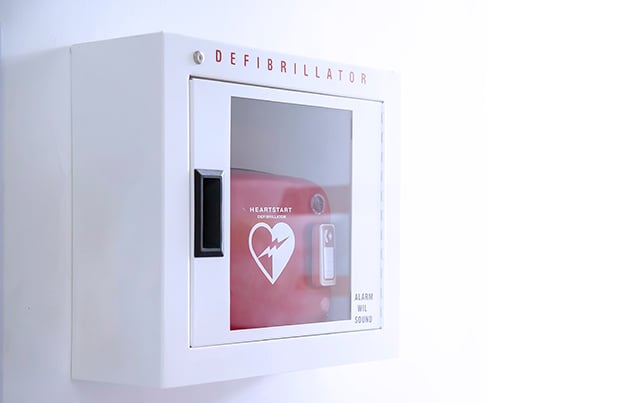
We support Automated External Defibrillator (AED) programs to enhance public safety. Through this initiative, community organizations can apply for grants to purchase AED equipment and provide training, helping ensure life-saving interventions are accessible when emergencies occur.
Partnering for better health
We believe lasting impact happens when we work together. Explore the programs above or connect with us to explore solutions for improving overall health and well-being across our region.