Sleep Study
Reid Health’s accredited Sleep Center provides sleep studies to diagnose sleep disorders, offering comfortable overnight testing and expert care.
Sleep studies at Reid Health
Sleep is essential to your overall health, and poor sleep can impact your energy, focus, and long-term wellness. At Reid Health Sleep Center, our board-certified sleep medicine specialists use sleep studies (polysomnography) to diagnose sleep disorders and guide personalized treatment.
Whether you experience loud snoring, daytime fatigue, or trouble staying asleep, a sleep study helps uncover what’s happening while you rest.
What is a sleep study?
A sleep study, also called polysomnography, is a painless overnight test that measures how your body functions during sleep. During the test, small sensors are placed on your skin to monitor:
- Brain wave activity
- Eye and limb movement
- Breathing patterns and oxygen levels
- Heart rate and rhythm
- Snoring and body movements
Most studies are scheduled at night, but daytime studies are available for shift workers. The goal is to record at least six hours of sleep so your care team can accurately assess your sleep quality and identify any disruptions.
Preparing for your sleep study
Your comfort is our priority. To help you have the best experience:
- Avoid caffeine and alcohol for several hours before your appointment.
- Take your regular medications unless told otherwise by your doctor.
- Shower before arriving and skip lotions or hair products so sensors stay in place.
- Bring your pajamas or other comfortable sleepwear, personal toiletries, and any items that help you relax, such as a favorite pillow.
- You may bring a small snack or beverage; light refreshments are available.
Our Sleep Center features private rooms designed for comfort, complete with a bed, recliner, TV, and private bathroom, much like a hotel stay.
What to expect during the study
After check-in, a technologist will review the process and apply the sensors. You’ll be able to read, relax, or watch TV before lights out.
Throughout the night, your breathing, movement, and brain activity will be monitored via noninvasive equipment.
If your doctor has ordered a split study, your technologist might begin CPAP therapy midway through the night to determine the right air pressure setting.
Most sleep studies end at about 6 a.m., but an earlier wake-up can be arranged. Afterward, you can shower and go about your day as normal.
Types of sleep studies offered
Depending on your symptoms and medical history, your doctor could order one of several types of studies:
- Baseline sleep study: Evaluates your natural sleep patterns and any abnormal events.
- Split sleep study: Diagnoses and begins treatment (such as CPAP) in one night.
- Positive airway pressure (PAP) titration study: Determines optimal air pressure for CPAP users.
- Multiple sleep latency test (MSLT): Measures how quickly you fall asleep during the day to assess daytime sleepiness.
- Maintenance of wakefulness test (MWT): Evaluates how well you can stay awake during quiet times of the day
- Home sleep test: A convenient at-home option for diagnosing sleep apnea and similar disorders.
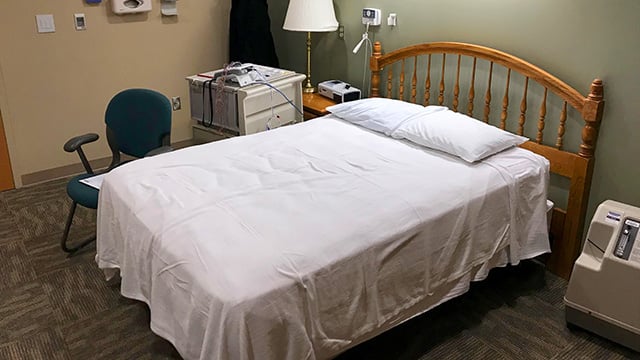
sleep center
Why choose Reid Health's Sleep Center?
Our Sleep Center is an AASM-accredited facility, which means we meet the highest national standards for safety, care quality, and patient outcomes. Our experienced team ensures every patient receives expert testing in a comfortable, private environment designed to support your best night’s rest.