Gallbladder
With Reid Health general surgeons, you have access to board-certified experts in gallbladder removal surgery, who offer advanced procedures with faster recoveries close to home.
Gallbladder removal surgery at Reid Health
Gallbladder removal surgery, also called cholecystectomy, is one of the most common surgeries performed at Reid Health. Our board-certified general surgeons have experience with several methods of gallbladder removal, including laparoscopic techniques, allowing you to overcome painful gallbladder issues and return to you daily life faster.
If you’re in East Central Indiana or West Central Ohio, count on Reid for your gallbladder removal surgery.
Reasons you may need gallbladder removal surgery
The gallbladder is a small organ located below the liver. It stores bile, which helps the body digest fat in the small intestine. In most cases, it needs to be removed when gallstones develop. Gallstones are rock-like materials made of cholesterol and a substance called bilirubin. They can block the bile ducts in the gallbladder, leading to a gallbladder attack. These attacks, which can last several hours, cause sudden pain in the upper right abdomen and other symptoms, including:
- Discomfort in the upper right or upper middle area of the stomach after eating, a condition called epigastric pain
- Gas, bloating, or heartburn
- Nausea and vomiting
People who have one gallbladder attack will likely have another one. In many cases, surgery to remove the gallbladder allows people to avoid these painful attacks.
Minimally invasive gallbladder removal surgery
Whenever possible, the general surgeons at Reid use laparoscopic surgery to perform gallbladder removal.
Laparoscopic cholecystectomy uses a thin tube with a light called a laparoscope to look inside the body. General surgeons prefer this method because it allows them to remove the gallbladder through several small incisions, leading to fewer complications and faster recoveries than with an open cholecystectomy.
Before the procedure, your surgical team gives you general anesthesia to help you fall asleep and keep you from feeling pain. The surgeon makes several small cuts in your abdomen to insert the laparoscope and other tools to remove the gallbladder. They’ll also pump a safe amount of gas into your stomach to expand the area, which gives the team more space to conduct the procedure.
Traditional gallbladder removal surgery
In some cases, surgeons will opt for a traditional, open cholecystectomy, which requires a large incision. Open surgeries are reserved for patients who may be unable to have laparoscopic gallbladder removal because of:
- A history of procedures in the same area of the stomach
- Being in the third trimester of pregnancy
- Bleeding in the middle of a laparoscopic operation
- Inflamed pancreas (pancreatitis)
- Obesity
- Severe liver concerns
During an open gallbladder removal, the surgeon makes a large cut (around five to seven inches) into the upper right section of the abdomen below the ribs. They open the area to get a better view and then cut the blood vessels and bile duct connected to the gallbladder to remove it.
Before an open or laparoscopic gallbladder removal, your surgeon may perform a special X-ray called a cholangiogram. This test involves injecting a dye into the bile duct before X-ray images are taken to help your surgeon locate and remove gallstones.
Surgical Services
Get ready for surgery
Surgery preparation is about more than just logistics — it’s about ensuring your health and peace of mind. Following the right steps sets the stage for a faster recovery and better results. Start here to learn how to prepare.
Preparing for your procedure
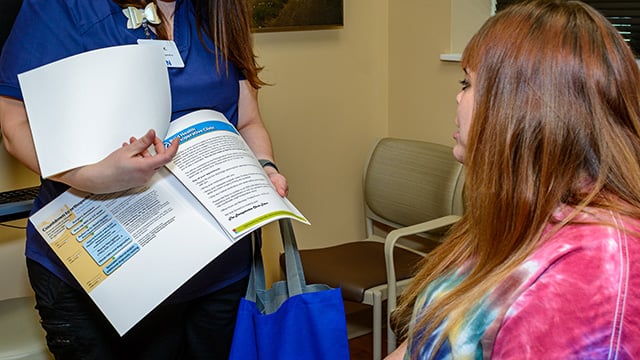
Before you have surgery, your surgeon’s team will ensure you are medically ready to have the procedure. This can take place in the surgeon’s office, or you may be referred to the Reid Health Perioperative Care.
At the Perioperative office, you’ll meet with your surgeon, a perioperative nurse navigator, and other members of your team. They’ll ask whether you are or may become pregnant and whether you take any prescription and over-the-counter medications. They may order tests to review your current health, including:
- Blood work
- Chest X-rays
- Electrocardiogram
- Gallbladder ultrasounds
You will also receive instructions for the weeks before your surgery. This information includes what medications to stop taking and when, what you should and shouldn’t eat or drink, and how to prepare for recovery.
You will likely go home the same day following laparoscopic surgery unless you experience complications. However, someone else should drive you home. If problems develop during surgery, you may be in the hospital longer.
You might also be in the hospital longer if you had open surgery. Scar tissue generally takes longer to heal after an open procedure.
You may receive fluids intravenously until you can drink and eat like usual, and your surgeon will monitor you for blood clots and problems with lung function.