Lung Cancer
Reid Cancer Center offers advanced lung cancer diagnosis and personalized treatment plans, offering unparalleled care and support close to home.
What is lung cancer?
Lung cancer develops when cells in the lungs begin to mutate uncontrollably, which is often the result of genetic damage to the DNA of cells in the airways because of smoking or inhaling dangerous chemicals.
Lung cancer is the third most common type of cancer and the No. 1 cause of cancer deaths in the United States — and rates of the disease in Indiana and Ohio exceed the national average. The oncologists at Reid Cancer Center are dedicated to screening for and treating this disease with advanced radiation therapy, clinical trials, immunotherapy, and other innovative treatments.
Types of lung cancer
Lung cancer is broadly categorized into two main types: small cell lung cancer (SCLC) and non-small cell lung cancer (NSCLC). These categories are based on the appearance of the cancer cells under a microscope and have different characteristics
- SCLC is fast-growing and aggressive, often spreading early to other parts of the body. It accounts for 10%–15% of lung cancers.
- NSCLC is slower-growing and includes subtypes like adenocarcinoma, squamous cell carcinoma, and large cell carcinoma. It accounts for 85%–90% of lung cancers.
Symptoms of lung cancer
Lung cancer doesn’t typically produce symptoms until later stages, when it’s harder to treat. That’s why annual low-dose CT scans for people who qualify are so important.
When symptoms appear, you might mistake them for signs of a respiratory infection or other lung condition. For example, the most common lung cancer symptom is a persistent cough that lasts for more than three weeks and gets worse with time. This cough can be dry or productive.
Other possible lung cancer symptoms include:
- Blood in the sputum or phlegm
- Chest pain
- Difficulty breathing
- Feeling tired all the time
- Frequent bouts of bronchitis or pneumonia
- Hoarseness
- Unexplained weight loss
- Wheezing or shortness of breath
Some lung cancers produce a group of symptoms that occur together and cause what are known as syndromes. For example, tumors in the upper part of the lungs can lead to Horner syndrome, which affects the eye and facial nerves. This can cause symptoms like eyelid drooping or weakness, a smaller pupil on the affected side, and an absence of sweating on that side of the face.
When lung cancer spreads to other parts of the body, various symptoms not directly related to the chest or lungs can arise. These could include:
- Blood clots
- Bone fractures
- Bone pain
- Headaches
- Loss of appetite
- Swollen or enlarged lymph nodes in your chest
There’s no difference in lung cancer symptoms between people who have never smoked and those who do (or did).
Risk factors for lung cancer
Cigarette smoking is the top risk factor for lung cancer and the cause of 80%–90% of all lung cancer deaths. Smoking other tobacco products, such as cigars or pipes, also increases your risk. People who quit smoking lower their risk, so talk with your Reid Health provider today about resources to help you quit.
About 10%–20% of lung cancer cases occur in people who never smoked or smoked fewer than 100 cigarettes during their lifetime. In some cases, the disease can be genetic or related to your age or family history of lung cancer.
However, the most common causes of lung cancer among people who don’t smoke are secondhand smoke and radon, a naturally occurring gas that can be found in soil and rock.
Cancer Care
Low-dose CT scan
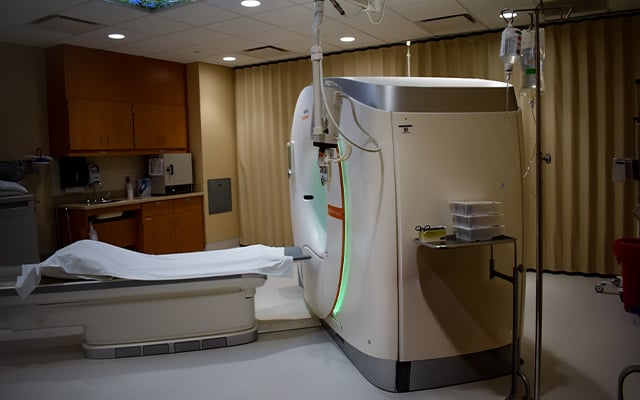
In addition to quitting tobacco, regular screening is one of your best defenses against lung cancer. One of the most common and effective forms of lung cancer screening is a low-dose CT scan.
A low-dose CT scan takes highly detailed X-ray images of your chest. A computer merges those images into a 3D picture of your lungs, potentially revealing small cancers that might not be detected on a regular chest X-ray or chest scan. As a result, doctors can identify lung cancer early, so you can begin treatment as soon as possible.
Low-dose CT scans are available year round at Reid for an affordable $29.
Lung cancer diagnosis
If you received suspicious results from a low-dose CT scan or other form of lung cancer screening, your provider will recommend follow-up testing. You might need one of these procedures:
- Biopsy: Your doctor will take tissue samples of your lungs and test them for cancer cells. The procedure might involve a bronchoscope, a thin tube equipped with a light and video camera inserted into your airways to give your provider a better view of your lungs. You might also have an open biopsy, in which the sample is removed surgically while you’re under anesthesia.
- Mediastinoscopy and mediastinotomy: Your doctor will take samples of the lymph nodes in your mediastinum, the area between your lungs.
- Sputum cytology: This test analyzes a mucus sample to see if you have lung cancer.
- Thoracentesis: This test is done if you have fluid around your lungs. Your doctor will take a sample of fluid to see if cancer is causing the buildup.
- Ultrasound: Ultrasounds are imaging exams that create pictures using sound waves. Endobronchial ultrasounds use a bronchoscope equipped with an ultrasound to take images. An endoscopic esophageal ultrasound uses an endoscope, a device similar to a bronchoscope and placed down your throat instead of your airways.
Staging lung cancer
If imaging tests, such as X-rays, CT scans, PET scans, or biopsies, indicate you have lung cancer, the next step is to determine the stage of the disease. Staging helps doctors understand how far the cancer has spread and guides treatment planning.
NSCLC is typically staged between 0 and 4:
- Stage 0: In stage 0, the cancer is confined to the top lining of the lung and has not spread.
- Stage 1: At stage 1, cancer is still confined to the lung and has not spread to nearby lymph nodes.
- Stage 2: At stage 2, the tumor is larger and has spread to nearby lymph nodes, but it still hasn’t spread beyond the lung.
- Stage 3: By stage 3, cancer has spread to lymph nodes in the chest and may involve nearby structures like the chest wall or diaphragm.
- Stage 4: By stage 4, cancer has spread to the lung linings or to distant parts of the body, such as the liver, brain, or bones.
SCLC is usually categorized as limited or extensive:
- Limited SCLC is confined to one side of the chest, including the lung and nearby lymph nodes.
- Extensive SCLC has spread beyond the chest to other areas of the body, such as distant organs or lymph nodes.
Understanding the stage of lung cancer is crucial for creating personalized treatment plans.
Lung cancer treatment
Once your provider knows the type and stage of lung cancer, treatment can begin. Most people receive more than one treatment to shrink or eliminate the cancer cells. Reid Cancer Center offers many lung cancer treatment options, and your provider will help you understand which treatments are best suited for your unique situation.
Chemotherapy
Chemotherapy involves medications taken orally or delivered via intravenous (IV) infusion. Generally, oncologists use a combination of chemotherapy medications as well as other forms of treatment to kill cancer cells.
Radiation therapy
Radiation therapy targets lung cancer cells in a specific area using high-energy X-rays to shrink or kill the cancer cells while sparing nearby healthy tissues as much as possible. This therapy is often used before or after cancer surgery to increase the chance of shrinking or eliminating all the cancer cells.
There are two types of radiation therapy: external and internal. External radiation therapy uses an X-ray beam outside the body to focus on the area with cancer. With internal radiation therapy, a very small radioactive source is placed into, or very close to, the area with cancer.
You might have radiation therapy when surgery isn’t an option because you’re not healthy enough to have surgery or if the tumor is in an area the surgeon can’t reach. It’s one of the most effective cancer treatments available.
Targeted therapy
In about 25% of lung cancer cases, tumors carry a genetic mutation that certain anti-cancer medications can target. Called targeted therapies, these treatments (often oral medications) can effectively shrink tumors and prolong the lives of people with lung cancer. Targeted therapy medications also tend to prevent cancer cells from dividing and growing.
Targeted therapy medications mostly affect cancer cells and not healthy cells surrounding them.
Immunotherapy
Your immune system protects you from outside substances, such as bacteria, infections, and viruses, that can cause harm. However, cancer is good at evading your body’s natural defenses, which is why your immune system doesn’t fight cancer the same way it does infections. Immunotherapy trains your immune system to recognize cancer cells and kill them or interfere with their ability to reproduce.
Immunotherapy is provided through an IV and is sometimes combined with chemotherapy and radiation therapy.
Surgery
Your oncologist might recommend surgery if your lung cancer is small and hasn’t spread to other parts of your body. Lung cancer surgery usually involves removing the tumors and nearby lymph nodes. Some lung cancers require a lobectomy, in which a surgeon removes one of the lobes on a lung.
Reid Cancer Center’s surgical oncologists use minimally invasive surgical techniques whenever possible to minimize pain and scarring and speed healing.
Take the next step in your care
Nationally recognized cancer care
Commission on Cancer® Accredited Program

Quality Oncology Practice Initiative (QOPI®)
Commission on Cancer® Accredited Program