Breast Cancer
Discover your breast cancer risks and learn how Reid Health Breast Center offers advanced mammograms and comprehensive care — all conveniently located close to home.
What is breast cancer?
Breast cancer is the most common type of cancer in women behind skin cancer. Thanks to the dedicated teams at Reid Cancer Center and the Reid Health Breast Center, women — and men — in East Central Indiana and West Central Ohio have access to advanced breast cancer care. 3D mammography and comprehensive treatments can help you or a loved one navigate a breast cancer diagnosis.
When you are diagnosed with breast cancer, it helps to understand the different types so you can better understand treatment options:
- Ductal cancers: The most common form, ductal cancers start in the ducts, small canals that carry breast milk to the nipple.
- Lobular carcinoma: This type of breast cancer starts in the lobules, the glands that make breast milk.
- Paget disease of the breast: This is a rare form of breast cancer that starts in the nipple, where the ducts come together and release breast milk.
Doctors also diagnose breast cancers based on whether they have spread to other tissues or organs. "In situ" breast cancers have formed but not yet spread. "Invasive" means the cancer has spread to other parts of the breast or body.
When only the best will do
We understand high-quality breast cancer care makes all the difference, so we’ve reached the highest level of standards set forth by the National Accreditation Program for Breast Centers (NAPBC). NAPBC accreditation means we’ve met the organization’s rigorous standards to be qualified as a center that offers the highest level of quality care in breast health.
Understanding the risk factors of breast cancer
Breast cancer starts when abnormal cells in one or both breasts grow out of control.
It’s unclear why these abnormal cells develop, but the following factors can play a role:
- Age: Breast cancer is most likely to develop after age 55.
- Certain genetic mutations: These cause between 5% and 10% of breast cancers. The most common mutations are in breast cancer 1 (BRCA1) and breast cancer 2 (BRCA2) genes.
- Dense breast tissue: Dense breasts have more fibrous and glandular tissue than fatty tissue. Dense breast tissue can increase breast cancer risk and mask cancer on mammograms.
- Early puberty or late menopause: Long-term exposure to estrogen periods can increase breast cancer risk. Women whose periods started before age 12 and who didn’t reach menopause until age 55 have a higher risk.
- Family history of breast cancer: Having a first-degree relative (mother, sister, daughter, or a male equivalent) who had breast or ovarian cancer increases a woman’s risk.
- Radiation treatments before age 30: Radiation to the chest or breast at an early age can increase a woman’s risk of having breast cancer when she’s older.
- Race and ethnicity: On average, white women are slightly more likely to develop breast cancer than African American women. However, African American women are more likely to develop the disease before age 40. Asian, Hispanic, and Native American women have a lower risk of developing and dying from breast cancer.
Symptoms of breast cancer
The breast cancer symptom women often look for is a new lump in the breast, armpit, or near the collarbone. But there are many other symptoms to watch out for, including:
- Breast or nipple pain
- Changes in the size or shape of the breast
- Inversion of the nipple
- Irritation or dimpling of the breast skin
- Nipple discharge, other than breastmilk, including blood
- Red or flaking skin on the nipple or breast
- Thickening or swelling on all or part of the breast
Cancer Care
3D mammograms: The leading screening for detecting breast cancer
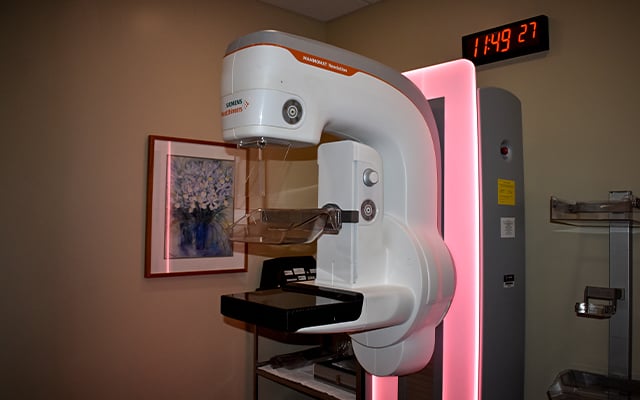
Not all women show symptoms of breast cancer, making annual mammograms essential, typically starting at age 40. However, if you're at higher risk, your doctor might recommend earlier or more frequent screenings. Reid Health Breast Center offers advanced 3D mammography, providing a clearer view of breast tissue. This technology helps providers identify suspicious areas more easily, leading to fewer callbacks and a more reassuring experience.
Diagnosing breast cancer
If your radiologist sees suspicious areas on a screening mammogram or your provider detects something abnormal during a physical exam, he or she will want to investigate further to determine whether you have breast cancer.
You might need to have additional tests, such as:
- Diagnostic mammogram: A radiologist will take more X-rays of the breast in a diagnostic mammogram than in a standard screening mammogram.
- Breast biopsy: During this test, your provider removes breast tissue or fluid and sends it to a lab to see if breast cancer cells are present.
- Breast MRI: MRI, or magnetic resonance imaging, uses magnets to create images of breast tissue.
- Breast ultrasound: A breast ultrasound uses sound waves to take images of breast tissue and is especially helpful in visualizing breast lumps that a mammogram cannot. Ultrasounds can also help doctors understand the difference between cysts, which are rarely cancerous, and solid masses that might need further testing to rule out cancer.
Navigating a breast cancer diagnosis
Receiving a breast cancer diagnosis can be overwhelming, but understanding the steps involved in the process can empower you to make informed and proactive decisions about your care. From initial assessments to treatment options like surgery, therapy, and follow-up care, every stage is designed to address your specific needs. This process may include:
Consultation with specialists
After your biopsy, you will meet with your care team. Initially, this may include just your oncologist, but additional specialists, such as a radiation oncologist or surgeon, may be added. Together, you and your care team will discuss your diagnosis and your options for treatment.
Breast surgery
Most women with breast cancer will have surgery to remove the cancer, and this often happens before other treatment, such as chemotherapy or radiation. Your care team, which includes your oncologist, a general surgeon, and possibly a plastic and reconstructive surgeon, will discuss these surgery options with you.
- Sentinel lymph node biopsy: This test can tell your doctor if breast cancer has spread beyond the breast to nearby lymph nodes. They’ll remove one or more lymph nodes—usually the sentinel lymph nodes, which are the first nodes cancer is likely to spread to, and send them to be analyzed by a pathologist. This helps determine the stage of the cancer and guides further treatment decisions, such as surgery or systemic therapy.
- Lumpectomy: If cancer hasn’t spread beyond the breast, a breast surgeon performs a lumpectomy to remove the tumor and a small amount of healthy tissue. A lumpectomy preserves most of the breast. It’s often followed by radiation therapy to reduce the risk of cancer returning.
- Mastectomy: For larger or more advanced cancers, your breast surgeon may recommend a mastectomy to remove the entire breast. There are different types of mastectomy, including skin-sparing or nipple-sparing, which can help preserve some of your natural breast.
- Reconstructive surgery: Many women choose this option to avoid using external breast prosthetics and feel more comfortable with their bodies after treatment. Reid’s plastic and reconstructive surgeon can work with you and your surgical team before your procedure so the surgeons can preserve parts of your breast for reconstruction. Together, you will decide on your breast reconstruction options.
Systemic therapies
Systemic therapies for breast cancer involve medications — taken by mouth, via injection, or infusion — that can reach cancer cells almost anywhere in the body. Reid’s medical oncologists and hematologists use your cancer’s stage and size, as well as your long-term goals for treatment, to determine which of the following therapies is right for you.
- Chemotherapy: This treatment involves one or more medications delivered intravenously or by injection.
- Hormone therapy: Hormone therapies work by interfering with hormones’ ability to bind to those proteins or by lowering levels of those hormones.
- Immunotherapy: Immunotherapy helps your body’s immune system fight breast cancer. Breast cancer cells can look like healthy cells, so your immune system doesn’t fight them like it might attack a virus or bacteria. Immunotherapies train your immune system to recognize what makes breast cancer cells harmful.
- Targeted therapy: Targeted therapy involves medications that stop breast cancer cells from reproducing or block the receptors that tell cells to grow. Targeted therapy can also be used on cancers with the BRCA1 and BRCA2 gene mutations. Oncologists can combine targeted therapies with chemotherapy to increase chemotherapy’s effectiveness.
Radiation therapy
Radiation therapy uses high-energy rays or particles to destroy cancerous tissue. Reid Cancer Center offers sophisticated radiation therapies to treat cancer as effectively as possible while sparing healthy tissue.
Support throughout your journey
Breast cancer treatment can be challenging physically and emotionally. Your Reid cancer care team is dedicated to supporting you at every step.
Side effect management
We focus on both cancer treatment and minimizing side effects. Our team implements evidence-based strategies to help you manage challenges related to your diagnosis and therapy, including:
- Lymphedema management: Lymphedema is whenfluid accumulates in the arms and legs. It is common among those with breast cancer. About 5% experience it in their first year of a cancer diagnosis, and 30%–40% experience it during their lifetime. Reid’s comprehensive lymphedema therapies can often help. Certified lymphedema specialists use massage and compression techniques to redirect built-up fluid so the body can flush it out. Lymphedema management is available with a physician referral for all patients with breast cancer.
- Paxman cooling caps: Paxman cooling caps are innovative devices designed to minimize hair loss during chemotherapy by cooling the scalp. By reducing the temperature of hair follicles, these caps help to constrict blood vessels and limit the amount of chemotherapy drugs that reach the hair roots.
- Oncology Care Companion: This personalized care management tool, available through MyReid, helps you stay on track with your breast cancer treatment plan. It provides reminders, educational resources, and step-by-step guidance for tasks like medications, appointments, side effect monitoring, and symptom management. Care Companion empowers you to take an active role in your care journey.
Cancer navigators
When you are diagnosed with cancer, you may feel overwhelmed and find it difficult to process information about your illness. At Reid Cancer Center, our cancer navigators can help. These caring nurses provide support for patients and their families throughout every phase of treatment. They can:
- Answer questions about your treatment plan
- Suggest support services
- Help you find ways to take charge of your own recovery
- Help set up doctor appointments
- Make sure you have transportation to and from the hospital
- And much more
Some patients rely heavily on their cancer navigator, while others call only occasionally for help. Whatever your needs, the cancer navigators are there for you.
Assistance with logistical needs
Our oncology social workers provide emotional support and resources to patients and their families, helping you navigate the challenges of a cancer diagnosis. Financial navigators assist with understanding insurance coverage and accessing financial resources so you can focus on your treatment without the added stress of financial concerns.
Cancer support group
Our Cancer Support Group welcomes anyone affected by cancer, including current and former patients and their families. This gathering provides a space for you and your loved ones to connect, share experiences, and gain insights from each other and guest speakers.

cancer care
Supportive care through Home Medical Equipment
The Reid Home Medical Equipment store offers compassionate support to women recovering from a mastectomy. The staff is specially trained to assist with post-mastectomy needs, offering a range of garments designed for comfort and fit, including prosthetics and bras.
In addition to post-mastectomy items, you can find medical equipment, compression products, and other supplies you need to support healing and overall well-being. Our personalized care ensures that you feel confident and supported during your recovery journey.
Take the next step in your care
Nationally recognised breast care

Quality Oncology Practice Initiative (QOPI®)
National Accreditation Program for Breast Centers (NAPBC)
NAPBC Certification recognizes breast centers that meet national standards for high-quality, comprehensive breast care.