Infusion Therapy for Cancer Treatment
The Reid Cancer Center infusion therapy clinic connects you to the cancer treatments you need close to home, delivered by people you know and trust.
Infusion therapy, here in Richmond and Connersville
Receiving cancer care can be a challenging journey. At Reid Cancer Center, we’re committed to providing you with care that’s as comfortable and convenient as possible.
We designed our specialized infusion therapy services with you in mind, and with easy access to communities throughout East Central Indiana and West Central Ohio, you can get the care you need without having to go to a major metropolitan area — even if you weren’t diagnosed at Reid.
Personalized care without the travel
We understand the importance of being close to family, friends, and your support network during cancer treatment. Reid Cancer Center’s infusion therapy services allow you to receive your chemotherapy, immunotherapy, hormone therapy, and other vital medications where you feel most comfortable.
We work closely with providers at Reid and facilities far from Richmond. Whether you were diagnosed at Reid or another hospital, our oncologists will collaborate with your provider to arrange your treatment close to home.
Care designed with your comfort in mind
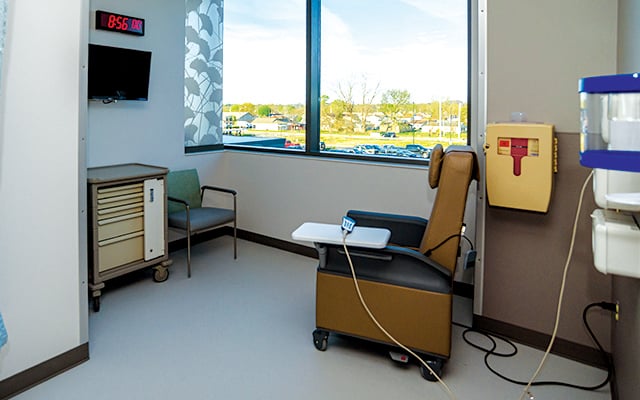
Our infusion centers in Richmond offer cancer medications and treatments, delivered by providers dedicated to reducing the stress of treatment. Our infusion suites feel more like a living room than a hospital room, and they're equipped with comfortable seating and a warm atmosphere to make your treatment as pleasant as possible.
You might receive your treatment in a private room, a semi-private room, or an open area with other patients. Since infusion sessions can sometimes last a few hours, we provide blankets to keep you warm, snacks, and drinks.
We also encourage visitors because we know treatment is easier when a friend or loved one is along for the journey.
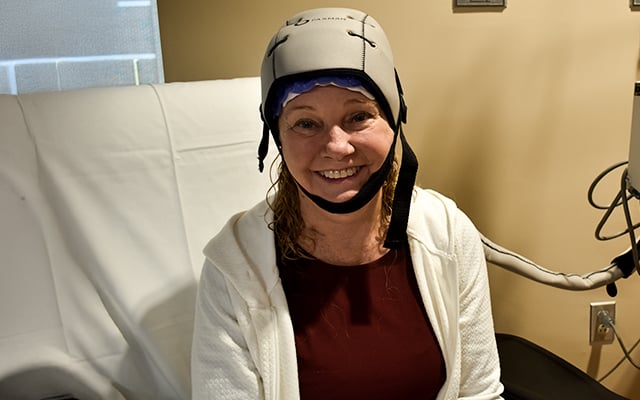
Cancer Care
Cooling caps: Reducing treatment-related hair loss
Cooling caps, also known as scalp cooling systems, are an innovative option for reducing hair loss during chemotherapy. By cooling the scalp, cooling caps reduce the amount of chemotherapy drugs that reach hair follicles, helping protect the follicles and reducing hair loss.
We offer cooling caps to people with a variety of cancers. Your cancer navigator can discuss whether they’re right for you, explain costs, and help you feel more confident during and after chemotherapy.
What is infusion therapy?
Infusion therapy involves medications or fluids delivered through a vein using an intravenous (IV) needle or tube.
You can receive many cancer medications, including chemotherapy, hormone therapy, and immunotherapy, through an IV Infusion. Medications administered intravenously can reach cancer more quickly than if you took an oral medication.
Infusion therapy for cancer
Many cancer medications are delivered intravenously. IV infusion therapy is the most common, but infusion drugs can be given in other ways.
Other types of infusion therapy include:
- Epidural: Injecting medication into the area around the spinal cord
- Intramuscular: Injecting medication into a muscle
- Subcutaneous: Injecting medication underneath the skin
If you’re receiving long-term cancer treatment and will have chemotherapy sessions over several months, your care team might recommend having a central line or a port surgically placed as an alternative to piercing the skin each time you have an infusion.
Ports and central lines are devices used to deliver chemotherapy directly into the bloodstream. A port is a small, disc-shaped device placed under the skin that connects to a central line, which is a thin tube inserted into a vein near the heart. Once inserted, ports and central lines make chemotherapy infusions more comfortable and easier to manage.
Your providers can guide you to the option that’s best for your needs.
Medical Services
Infusions: Not just for cancer
Infusion therapy has many uses beyond cancer. It can provide powerful pain management, deliver iron to people with anemia, and treat bacterial and viral infections.
It’s also commonly used to provide hydration, treat autoimmune disorders, and deliver nutrients or medications you can’t take by mouth. At our infusion therapy clinics in Richmond and Connersville, we help people manage a range of conditions safely and effectively, ensuring they can get the treatment they need close to home.
The infusion therapy process
Your oncology team will schedule your treatments based on your diagnosis and the medications you’ll receive. During your first visit to the Infusion Center at Reid, we’ll explain what to expect.
When treatment begins, you’ll be connected to an infusion pump, which will deliver your medication.
You might receive other medications along with chemotherapy or other drugs. For example, vitamin infusions can combat deficiencies and potential side effects. IV fluids can keep you hydrated. You might also need anti-nausea medications or steroids to prevent skin reactions.