Varicose Veins
Varicose veins can cause pain, swelling, and discoloration that can interfere with your quality of life. Reid Vascular Surgery experts offer advanced treatment options close to home.
Expert varicose vein management
Reid Vascular Surgery offers several nonsurgical and minimally invasive vein treatments to reduce or eliminate varicose veins and improve vein health. Our skilled specialists perform noninvasive screening procedures to help identify varicose veins and work with you to develop a treatment plan that works with your lifestyle.
What are varicose veins?
Varicose veins are enlarged, blue, or purple blood vessels that appear above the skin’s surface. They occur because of a weakening in the vein’s wall or valves.
The veins in your legs have one-way valves that keep your blood flowing to your heart. If those valves are weak or the vein is damaged and blocks valve function, blood can pool inside the veins, causing swelling that can lead to varicose veins.
Without treatment, varicose veins can be both unsightly and uncomfortable.
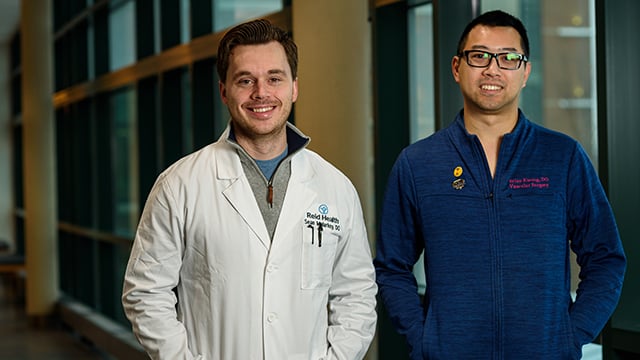
why choose reid health
The right place for varicose vein care
The team at Reid Vascular Surgery is recognized for its skill in treating varicose veins and offers many options for people with uncomfortable and unsightly varicose veins.
With flexible scheduling and trusted providers in East Central Indiana and West Central Ohio, you also get our expert care close to where you live and work at a time that works for you.
Choose Reid for exceptional vein care, helping you achieve healthier looking, more comfortable legs.
Varicose veins signs and symptoms
In addition to being large and visible, varicose veins can cause other common symptoms, including:
- Discolored skin around the varicose vein
- Itching in the legs, especially on the lower leg and ankle
- Mild swelling, discoloration, or ulcers around the ankles
- Painful, achy, tender, or heavy-feeling legs
- Restless leg syndrome
- Throbbing or cramping in the legs
Risk factors
Several factors can increase your risk of developing varicose veins, including:
- Age: As the valves in your veins age, normal wear and tear cause them to weaken, leading to varicose veins.
- Family history: If someone in your family has varicose veins, you’re at risk of developing them. About half of all people with varicose veins have a family history.
- Gender: Women tend to develop varicose veins more often than men. Hormonal changes throughout life can raise a woman’s risk of developing varicose veins.
- Lack of movement: Standing or sitting for extended periods, especially with your legs bent or crossed, restricts blood flow and can increase your risk of developing varicose veins.
- Pregnancy: During pregnancy, the extra weight of the growing baby puts pressure on the veins in the mother’s legs. Varicose veins that develop during pregnancy might disappear within three months to a year after delivery. If they don’t, a vein specialist can offer guidance about treatment options.
- Weight: Being overweight can put extra pressure on your veins, which can lead to varicose veins.
Minimally invasive vein care
Reid’s vascular specialists use advanced, minimally invasive procedures to treat varicose veins effectively, so you can reduce your symptoms and feel more confident about your legs’ appearance.
Ambulatory phlebectomy
During an ambulatory phlebectomy, the surgeon numbs the varicose vein and then removes it through a series of very small (2 to 3 millimeter) incisions in the skin. The procedure is done in the office and takes about 30 minutes. It leaves a very smooth skin surface.
Laser varicose vein ablation
Endovenous laser therapy (EVLT) is a simple laser treatment that typically takes less than an hour. The surgeon numbs the area, makes a small cut in the skin, and places a catheter into the damaged vein. A laser fiber is inserted into the catheter and heats the length of the vein.
An alternate endovenous ablation treatment, VNUS Closure®, uses radiofrequency energy rather than thermal energy.
The treated varicose veins close and eventually shrink.
Sclerotherapy
Sclerotherapy involves injecting a sterile solution directly into the varicose vein to damage the vein. Over time, the vein turns into scar tissue and fades away.
Vascular specialists use a fine needle to perform sclerotherapy, which reduces pain and doesn’t require anesthesia. Sessions take place in the office and last 15 to 30 minutes, and you can return to work the same day. You might need only one treatment, but some people need additional injections to fully eliminate their varicose veins.
VenaSeal™
This minimally invasive technique uses medical-grade adhesive to seal the saphenous vein. It allows the surgeon to treat the entire length of the vein without the risk of nerve injury.
This procedure can be combined with ambulatory phlebectomy and sclerotherapy to provide lasting relief from the discomfort and unsightliness of varicose veins. It also heals venous ulcers and prevents new ones from developing.