Cardiac Catheterization and Stenting
Reid Health Heart & Vascular Center offers advanced care for your heart, including cardiac catheterization procedures such as stenting, to help treat heart disease.
Cardiac catheterization at Reid Health
When you have a clogged or blocked artery that needs opening, the advanced cardiac catheterization labs at Reid Health Heart & Vascular Center are ready for your needs. Whether your provider needs more information to confirm a diagnosis or you need experienced care for a heart condition, our team of highly skilled heart specialists is committed to delivering exceptional care to people in East Central Indiana and West Central Ohio.
We perform thousands of cardiac catheterization procedures each year in our inpatient and outpatient catheterization labs, ensuring you receive expert care from providers who are well-versed in the latest techniques and best practices.
What is cardiac catheterization?
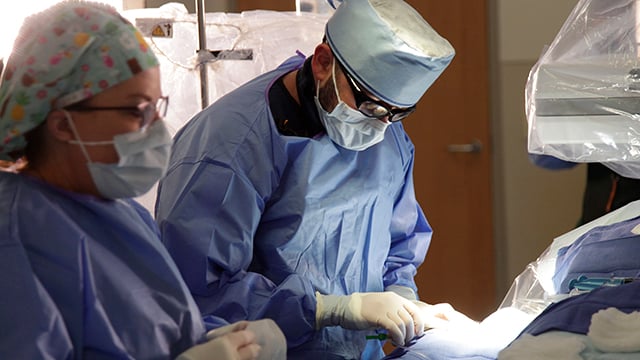
Cardiac catheterization, also known as heart catheterization or cardiac cath, is a minimally invasive procedure used to diagnose and treat various heart conditions. During this procedure, a thin, flexible tube called a catheter is inserted into a blood vessel in your wrist or groin and carefully guided to your heart.
This procedure allows our heart specialists to perform a variety of diagnostic tests and treatments without the need for surgery. Cardiac catheterization can provide detailed information about your heart's structure and function, including blood flow, heart rhythm, and the condition of your heart valves and blood vessels.
Why choose Reid Health
Your heart is in the right place
At Reid, we understand how valuable high-quality, local heart care is. Our experienced heart specialists thoroughly explain your catheterization procedure and answer all your questions to ensure you feel comfortable and informed. Whether you're experiencing chest pain, have been referred for further testing related to chest pain, received abnormal stress test results, or are managing a chronic heart condition, trust Reid to provide the expert cardiac care you deserve.
Conditions treated with cardiac catheterization
Cardiac catheterization is used to diagnose or treat a wide range of heart conditions, including:
- Aortic stenosis, mitral valve regurgitation, and other forms of heart valve disease
- Atrial fibrillation (AFib and other forms of heart arrhythmia
- Cardiomyopathy
- Congenital heart defects
- Coronary artery disease
- Heart attack
- Heart disease
- Pulmonary hypertension
Cardiac catheterization procedures
At Reid, we offer several types of cardiac catheterization procedures, each tailored to address specific diagnostic or treatment needs:
- Biopsy: A cardiac catheterization can take a tiny sample of your heart tissue to test for certain conditions.
- Catheter ablation: This procedure uses radiofrequency energy or extremely cold temperatures (cryoablation) to treat certain types of arrhythmia.
- Diagnostic catheterization: A diagnostic catheterization, also called angiography, combines X-ray imaging with a special dye injected through a catheter to show information about your heart function, blood flow, possible blockages, and other abnormalities.
- Stenting and angioplasty: If you have a blocked or narrowed artery, your heart specialist can open it with a small balloon (angioplasty) and insert a small mesh stent to keep the artery open.
- Transcatheter aortic valve replacement (TAVR): Cardiac catheterization can be used to repair a diseased aortic valve during a TAVR procedure.
- WATCHMAN: During this procedure, your provider intravenously places a small device in your heart that improves AFib.
Cardiac catheterization can also be used during surgery to repair heart defects.
Preparing for your cardiac catheterization
If you are scheduled for an outpatient cardiac catheterization procedure, use these tips as you prepare.
- Follow your heart specialist’s instructions: You will discuss your current medications with your care team, and they will tell you what to take and when to stop taking certain medications before the procedure. Your provider will also tell you when to stop eating or drinking before the procedure.
- Arrive with support: Plan for someone to drive you home and stay with you after the procedure. You may not be able to drive or manage tasks immediately afterward.
- Wear comfortable clothing: Wear loose, comfortable clothing. You may need to change into a hospital gown during your visit.
- Bring documentation: You will need identification, insurance information, and a list of medications you currently take.
What not to bring
Leave jewelry, watches, and expensive belongings at home to prevent loss or damage. Avoid bringing unnecessary items or large bags, as space in the hospital or procedure area may be limited.