Spider Veins
Spider veins don’t always cause pain and discomfort, but they can impact your self-confidence. Minimally invasive treatment from Reid Vascular Surgery can help.
Regain confidence with spider vein treatment
Spider veins are blood vessels easily visible through the skin's surface. Although they don’t always cause pain and discomfort, they can be unsightly and make you feel uncomfortable about your physical appearance.
If you have spider veins and would like to reduce or eliminate them, talk to one of our specialists at Reid Vascular Surgery to learn whether minimally invasive treatment is right for you. Reid Health experts offer several minimally invasive options including sclerotherapy, a procedure that reduces the appearance of spider veins by up to 80%.
What are spider veins?
Spider veins are dilated blood vessels. They make a pattern similar to tree branches or spiderwebs and are typically red, although they can also be purple or blue. Spider veins can appear anywhere on the body, but they’re most often seen on the legs and face.
Unlike varicose veins, spider veins are small and don’t cause skin to bulge. However, like varicose veins, spider veins are caused by poor vein health — structural damage in the blood vessels.
Some veins in the legs use a series of one-way valves to prevent blood from flowing backward when they carry it to the heart and other parts of the body. The valves can become defective for several reasons, making it difficult for the muscles to push the blood upward. Spider veins result from blood pooling and pressure increasing within the vein, weakening the vein wall.
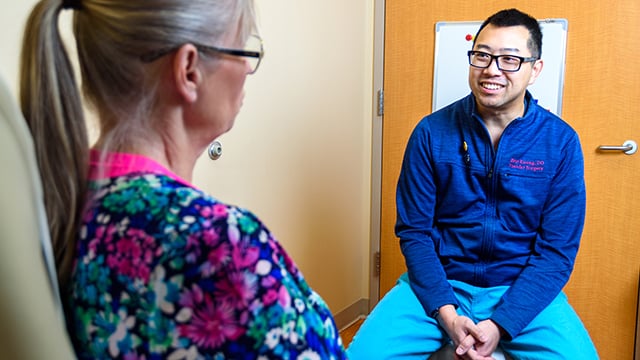
why choose reid health
The right place for spider vein care
The team at Reid Vascular Surgery knows how much spider veins can affect your self-image and confidence, and we’re dedicated to helping you find the right treatment, so you can feel better about your appearance.
With flexible scheduling and trusted providers in East Central Indiana and West Central Ohio, we make getting the care you need easy and convenient.
Signs and symptoms of spider veins
Often, spider veins are simply a cosmetic issue, but they can also cause pain and discomfort. Signs and symptoms include:
- Aching or cramping in the legs
- Discolored skin with veins radiating out from a central point
- Itching, especially on the lower leg and ankle
- Painful, tender, or heavy-feeling legs
- Tiredness, burning, throbbing, or tingling in the legs
Spider vein risk factors
Although spider veins are associated with milder symptoms than varicose veins, the two conditions share a similar cause as well as common risk factors, including:
- Age: The one-way valves in your veins tend to weaken as you age. So do your calf muscles, which help squeeze the veins in your legs and keep blood moving up to your heart.
- Excess weight: Being overweight can put extra pressure on the veins in your legs, resulting in spider veins.
- Family history: If someone in your family has a history of blood clots or spider veins, you have a greater risk of developing them.
- Gender: Spider veins occur more often in women than in men.
- Hormonal birth control or hormone therapy: The hormone estrogen, which can weaken vein valves, is used in many methods of birth control, often in combination with progesterone. Hormone therapy for menopause can also increase the risk of developing spider veins.
- Pregnancy: Extra weight gained from the growing baby puts pressure on the veins in the legs. Women who already have spider veins often find they get worse during pregnancy.
- Sedentary lifestyle: If you regularly sit or stand for long periods, you might be at increased risk for spider veins. Prolonged sitting or standing restricts blood flow to the legs.
Spider vein treatments at Reid
Whether spider veins cause physical discomfort or are more of a cosmetic issue, there are several ways to treat them. Management strategies can provide temporary relief, and minimally invasive surgical procedures might offer a long-term solution.
Light-guided sclerotherapy
This minimally invasive surgical procedure helps reduce or eliminate the appearance of varicose and spider veins. Sclerotherapy involves injecting a sterile solution directly into the damaged blood vessels. The solution damages the vein lining, and over time, the veins turn into scar tissue and fade by 50% to 80%.
Because it’s performed with a very fine needle, sclerotherapy causes very little pain. Anesthesia isn’t needed, and you can return to work or other activities the same day. Sessions take place in the office and last 15 to 30 minutes. Some patients are happy with the results after just one session, while others might want further injections for the optimal effect.
The experts at Reid Vascular Surgery are recognized leaders in their field, offering a variety of surgical procedures to treat uncomfortable and unsightly veins.
Compression stockings
The most conservative spider vein treatment is to wear compression stockings, which create pressure around the legs to reduce the backflow of blood. Compression stockings don’t cure spider veins but can reduce symptoms, such as aching and pain and venous ulcers in the legs, as well as deep vein thrombosis. Compression stockings are available at Reid Home Medical Equipment
Exercise
Low-impact activities — such as walking, cycling, swimming, and light exercises focused on the legs — can help relieve the symptoms of venous disease, including spider veins. Regular exercise of this type can improve your circulation and help keep blood from pooling in your legs. Reid Fitness offers group fitness and yoga classes designed to help keep you moving.